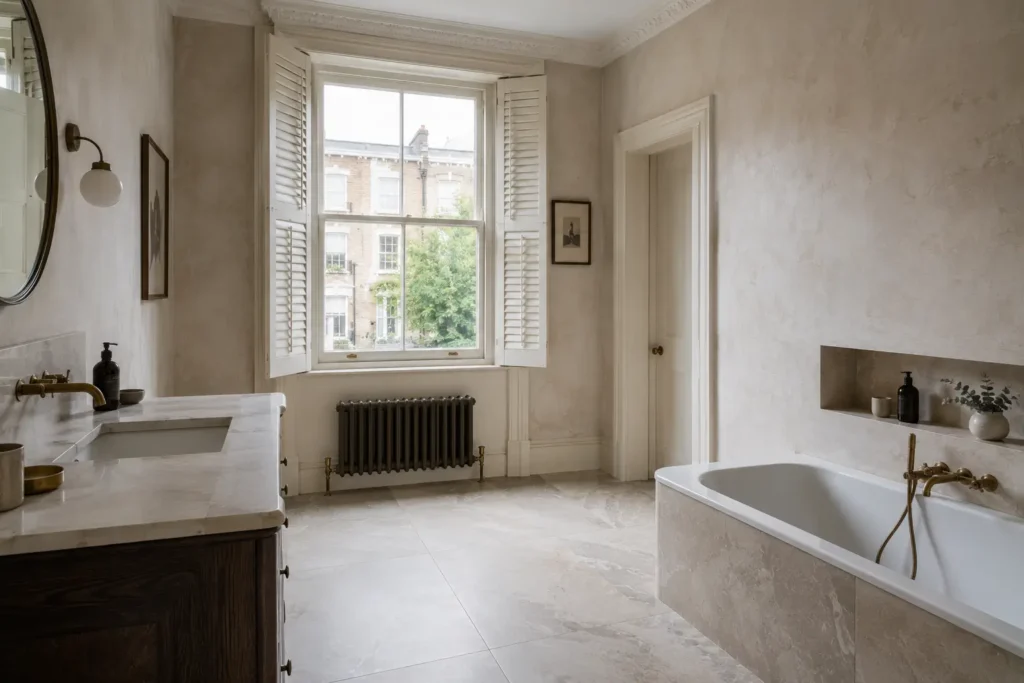
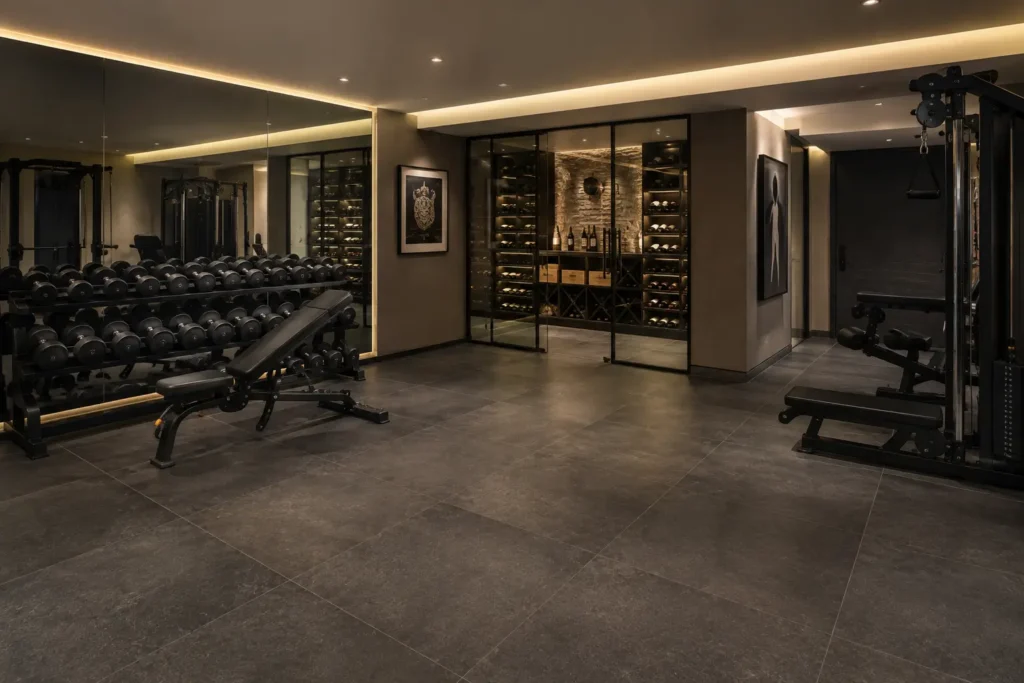
Clients choose tiles; installations are judged on edges. Every corner, threshold and junction is a decision, and the difference between a specification that looks expensive and one that looks merely costly usually lives in these few millimetres.
Edges: Mitre, Profile or Nothing
Where a tiled surface turns an external corner, there are three options. A mitred corner — both tiles cut at 45 degrees so the glazed faces meet — is the most refined and the most demanding; a chipped mitre is unforgivable, so it requires a tiler who has done it before. A metal or matching trim profile is robust and honest, and in brushed brass or matt black it can be a deliberate detail rather than a concession. Leaving a raw tile edge exposed is the one option with no defence.
In Knightsbridge and Chelsea projects where slabs run floor to ceiling, mitred returns at door reveals and window sills are what make the material read as stone rather than cladding.
Thresholds Between Materials
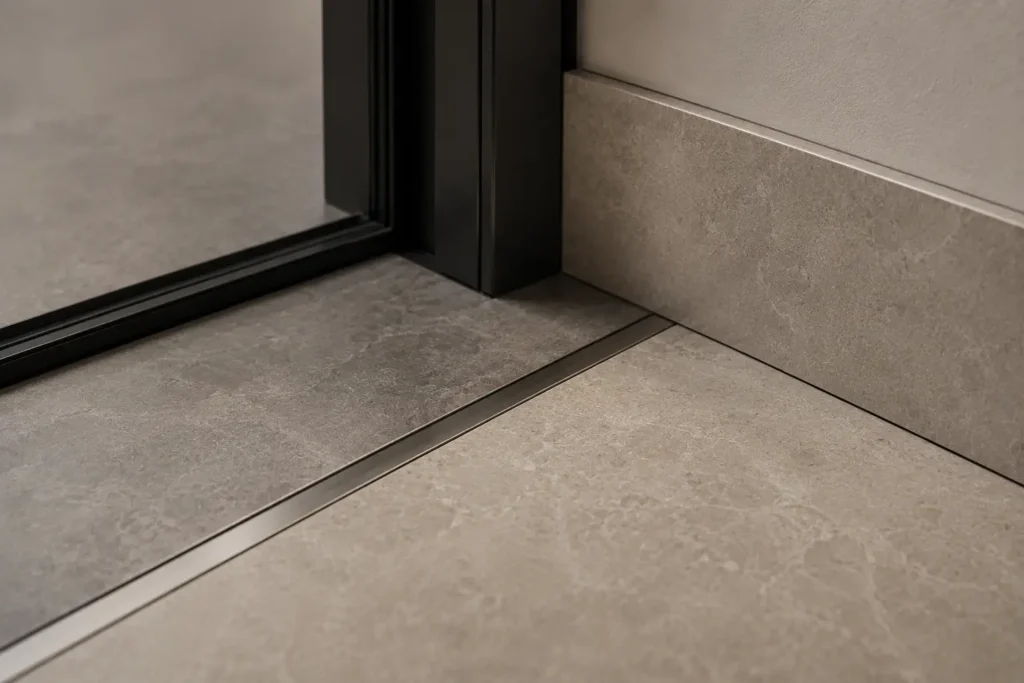
The junction between tile and timber, or between two tiled floors, should be planned at design stage and always beneath the closed door line, so from either room only one material is seen. A flush metal strip in a finish that matches the ironmongery is the cleanest solution. Where levels differ, resolve the difference in the substrate rather than with a ramped trim — sloped thresholds date a scheme faster than almost anything else.
Skirtings
Three approaches, in ascending order of refinement. A conventional painted timber skirting sitting on the tile, correct in period rooms. A skirting cut from the floor tile itself, typically 80 to 100mm high with a mitred top edge, which suits contemporary schemes. Or a shadow-gap detail, where the wall stops short of the floor and the plaster returns into a recess — the most architectural option, and the least forgiving of any settlement.
Movement Joints
The least loved detail and the most necessary. Perimeter joints, joints at every threshold and joints at intervals across large floors are what prevent cracking. Colour-matched silicone in the perimeter, hidden behind the skirting, makes them effectively invisible.
Where a floor runs from a Chelsea kitchen through bifold doors onto a terrace, a movement joint at the threshold is not optional — internal and external surfaces expand at entirely different rates, and the joint is what absorbs the difference.
We can specify trims, thresholds and matching skirtings alongside any collection — ask before ordering, not after.