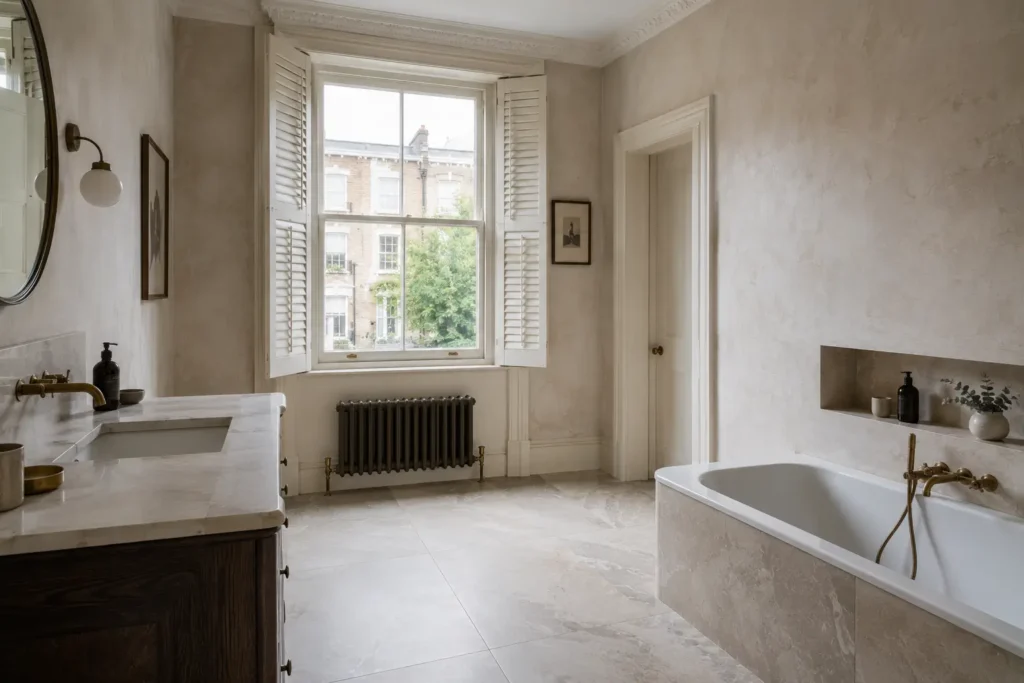
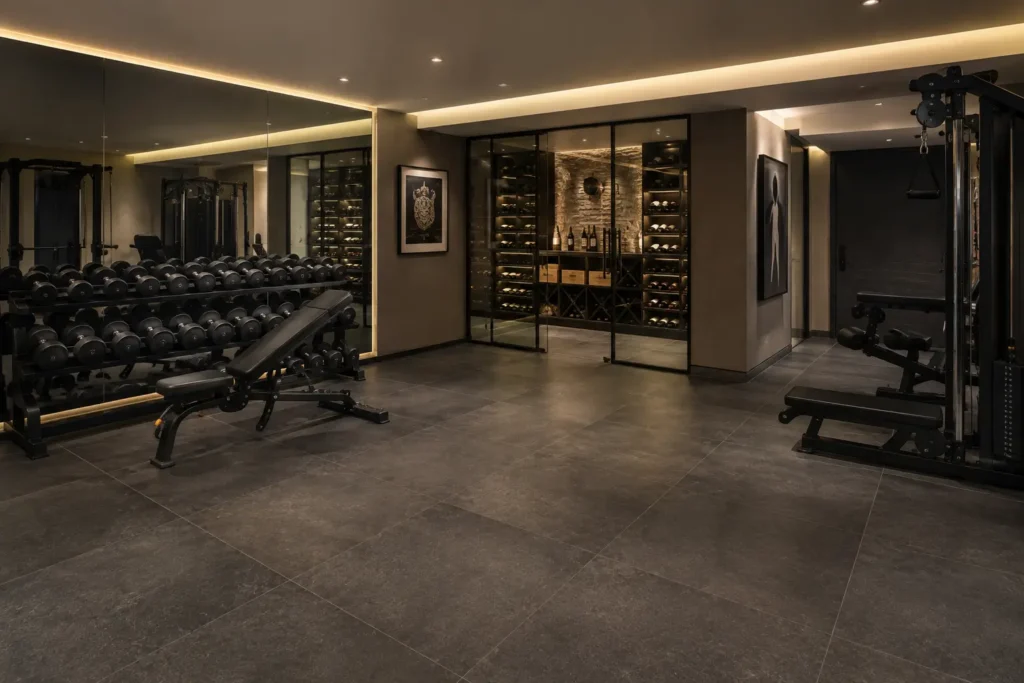
The honest answer is: very little. Porcelain is the lowest-maintenance premium surface available, and most of the trouble people encounter with it comes from treating it like natural stone — or from cleaning it enthusiastically with the wrong product.
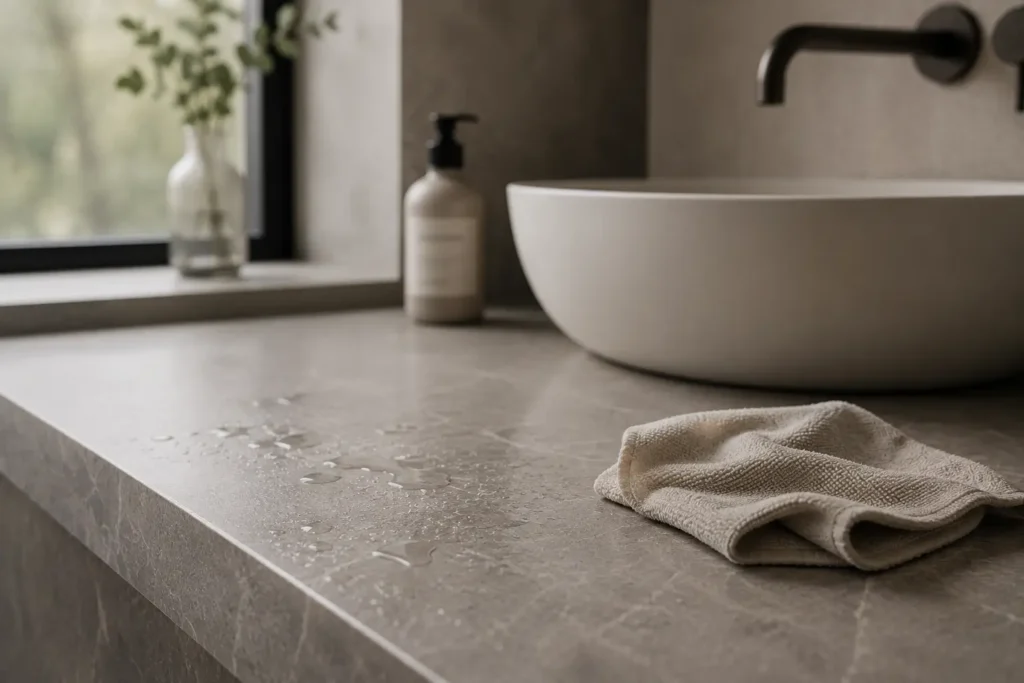
It Does Not Need Sealing
Fully vitrified porcelain has water absorption below 0.5%, and the best bodies below 0.1%. There is nowhere for a stain to go. Sealers marketed for porcelain sit on the surface rather than penetrating it, and over time they build a film that dulls the finish and attracts dirt — the very problem they were sold to prevent. The exception is grout, which is porous unless epoxy, and can be sealed with benefit in a shower or behind a hob.
Textured and structured finishes are the one qualification to the low-maintenance claim. Their grip comes from surface relief, which also holds soap film and dust — they want a stiff brush occasionally rather than a mop alone. This is worth knowing before specifying a heavily structured floor in a Kensington bathroom used daily.
London Water Is the Real Issue
Across Kensington, Chelsea and most of the capital, water is hard. Limescale is what actually marks a bathroom surface — a whitish film on shower walls and glass rather than any staining of the tile. The remedy is routine rather than dramatic: squeegee the shower walls, and use a mildly acidic descaler periodically on the tile face. Where a household finds this tedious, a water softener resolves it permanently and improves everything else in the house as well.
What Not to Use
Avoid wax and oil-based floor products, which build a film on matt surfaces. Avoid bleach on coloured grout, which lightens it unevenly. Avoid abrasive pads on polished or lappato faces. And avoid steam cleaners on very recently laid floors, before the adhesive has fully cured. A pH-neutral cleaner and hot water handle ordinary maintenance for almost every surface we supply.
Matt Floors and the Dulling Myth
Owners of matt floors sometimes report the surface looking cloudy after a few months. This is nearly always detergent residue, not wear — the fix is a single deep clean with an alkaline tile cleaner, followed by rinsing with clean water. Rinsing is the step people skip, and it is the step that matters.
Polished and lappato surfaces have their own small habit: they show water marks in raking light. A microfibre cloth over the floor after washing removes them entirely, and takes a minute.
We provide care guidance with every order, matched to the specific finish supplied.