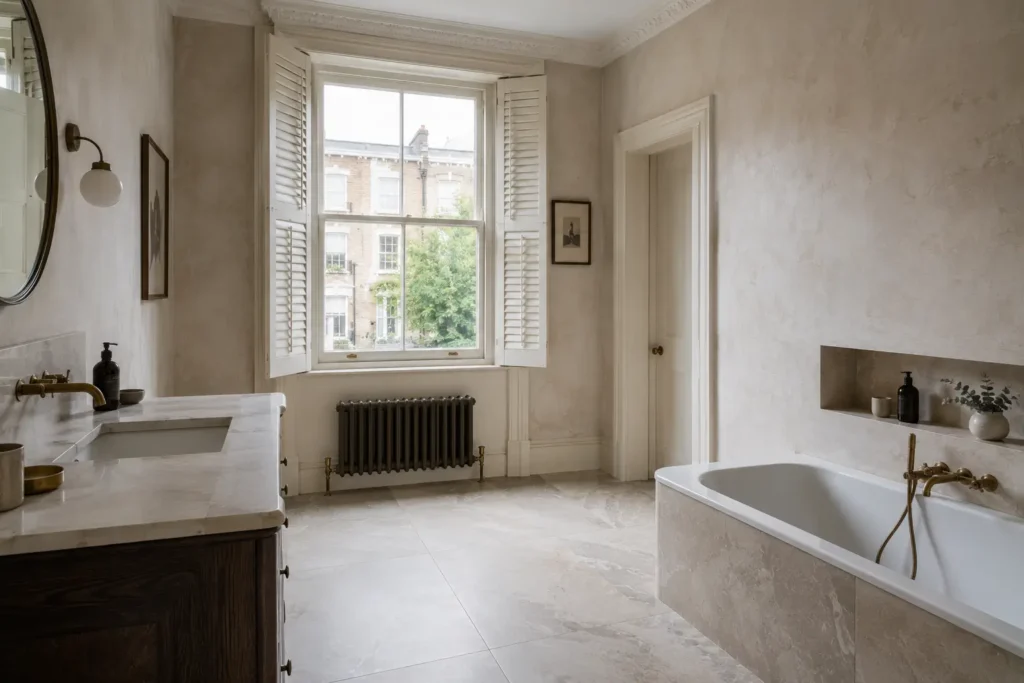
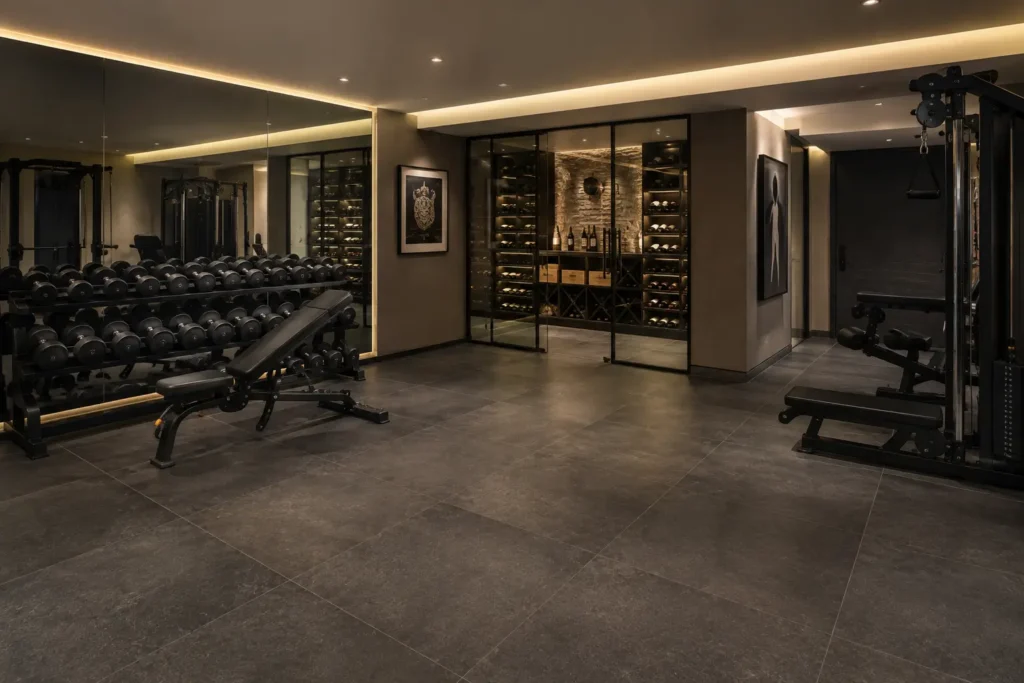
Porcelain is specified almost automatically in bathrooms and kitchens and almost never in bedrooms — largely from habit rather than reasoning. In houses with underfloor heating throughout, and in principal suites where the bathroom and dressing room open directly off the bedroom, that convention is worth re-examining.
The Comfort Objection, Examined
The objection to a tiled bedroom is that it feels cold underfoot. Over underfloor heating, this is simply not true: porcelain conducts warmth faster than timber and holds it longer, so a heated tiled floor is warmer to bare feet at six in the morning than an unheated board. Where there is no underfloor heating, the objection stands and carpet or timber remains the better answer. The decision follows the heating, not the room.
Dressing Rooms and Principal Suites
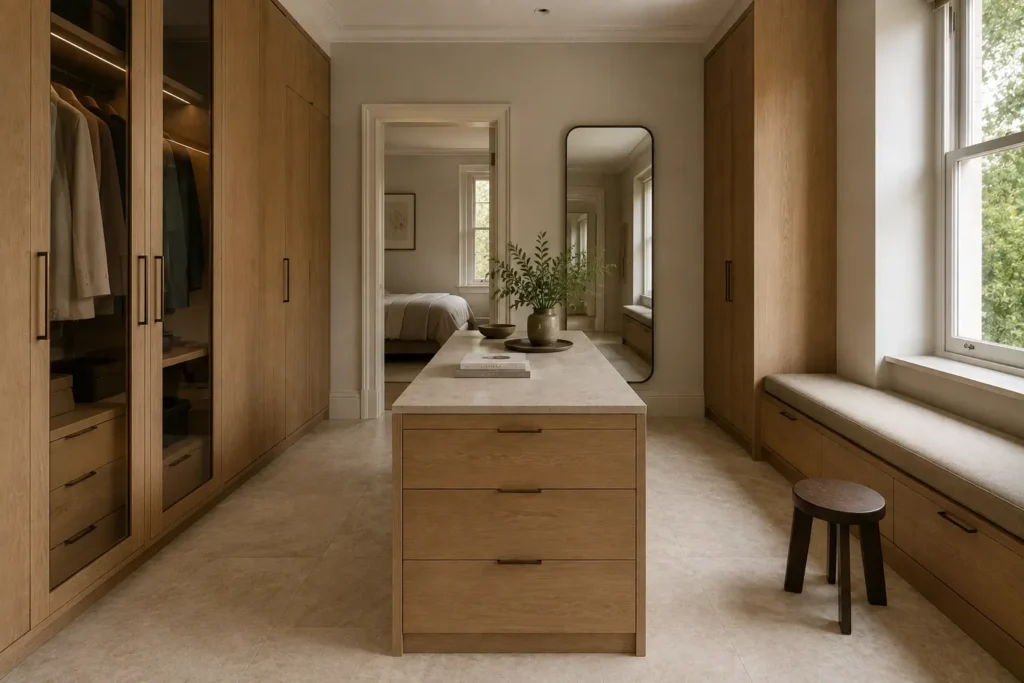
Dressing rooms make the strongest case. They are frequently internal, often lack windows, take heavy furniture on castors, and adjoin bathrooms directly. A continuous porcelain floor running from the bathroom through the dressing room into the bedroom removes two thresholds and makes a Belgravia or Knightsbridge principal suite read as a single sequence of spaces rather than three separate rooms. It also solves the practical problem of a bathroom doorway where wet feet meet carpet.
In a dressing room, choose a warm mid-tone with quiet movement. The room is full of colour and texture from its contents, and the floor should recede.
Walls: Headboards and Returns
A bookmatched or relief slab behind the bed is one of the most effective uses of porcelain in a house — a wall seen constantly, never touched and rarely cleaned. Full-height, wall-to-wall, with the bed centred on the match, it replaces the need for a headboard entirely and gives a bedroom an architectural centre. Keep everything else in the room quiet; this surface is the whole gesture.
Acoustics and Softening
The genuine consideration is sound. A fully tiled bedroom with hard walls will be acoustically bright and less restful. Plan for a large rug under the bed extending well beyond it, full curtains rather than blinds alone, and upholstered furniture. With those in place the room is warm and quiet; without them, no amount of underfloor heating will make it feel comfortable.
Format choice can soften the room as well. Wood-effect planks in a bedroom read as boards rather than as tiling and carry none of the bathroom association, while a warm travertine effect in a large format reads as stone floor rather than tiled floor. Both give the practical benefits without the room announcing what it is made of.
Ask us about the warmer, softer collections we hold specifically for bedroom and dressing room floors.