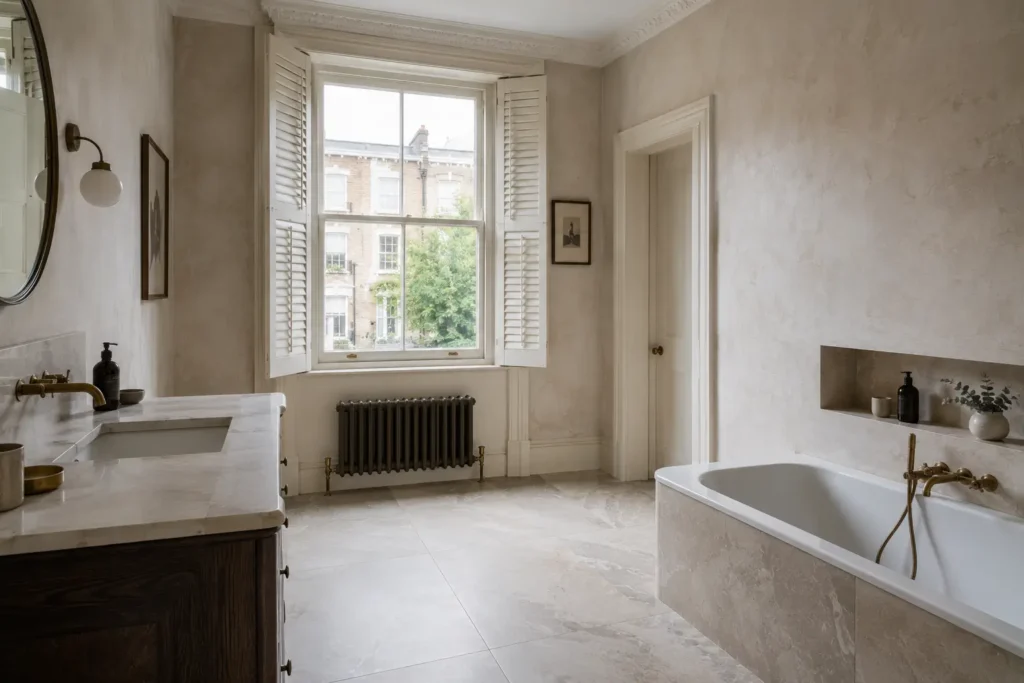
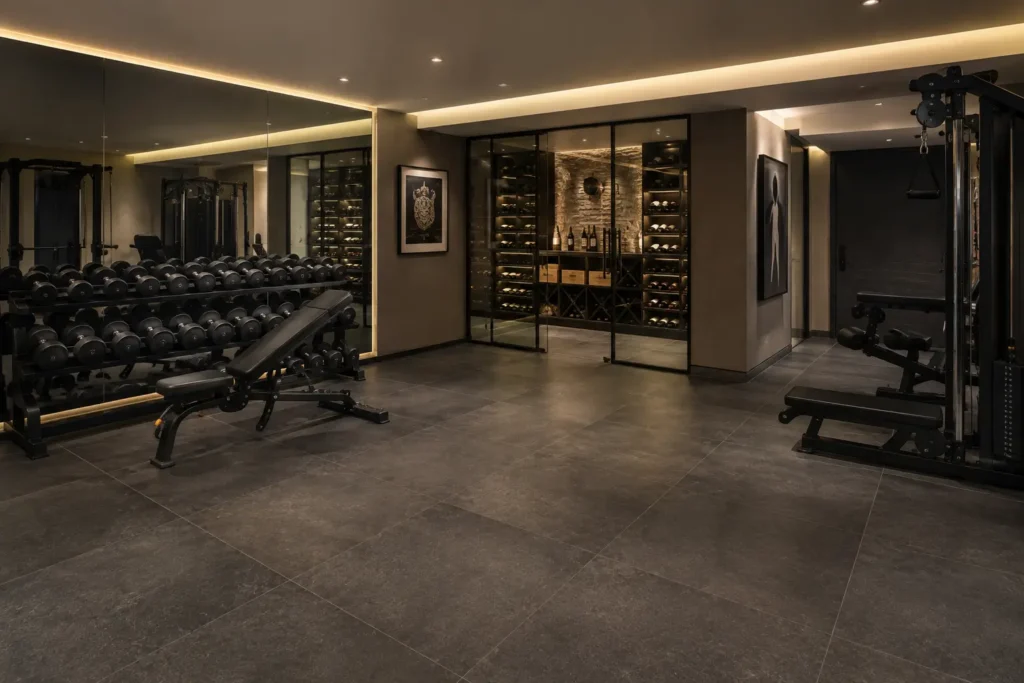
A relief tile is the only surface whose appearance is created almost entirely by something other than itself. The colour is secondary; the shadow is the design. Which means a three-dimensional tile specified without a lighting decision is a tile specified blind.
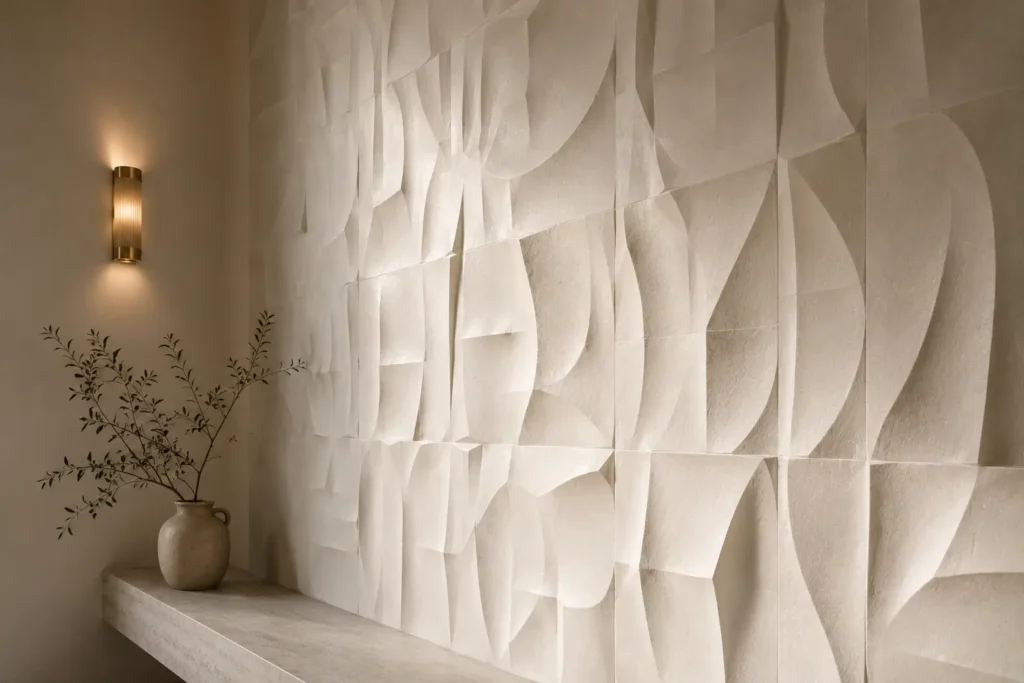
Light Is the Material
Relief surfaces need grazing light — a source close to the wall, directed along it rather than at it, so the projections cast shadows across the face. A downlight set 200mm from the wall will animate a fluted surface completely; the same tile lit from the centre of the room reads as flat and slightly disappointing. Specify the lighting and the tile together, and if the lighting cannot be changed, choose a flat surface instead.
Natural light does the same work at certain hours only. A relief wall on the return of a Notting Hill living room, catching low afternoon sun from a west window, is spectacular for two hours and quiet for the rest — which is a legitimate design intention if it is intentional.
Scale of Relief
Fine ribbing and fluting at 5 to 10mm depth reads as texture and can cover a large area without dominating: a full bathroom wall, a fireplace return, the front of a bar. Deep sculptural relief at 20mm and beyond is an object rather than a surface, and belongs on one wall or one panel only. As with pattern, most regret comes from choosing a depth one step bolder than the room needed.
Where It Works
Behind a bed, in a Knightsbridge principal suite where the wall is seen but rarely touched. Behind a bath. On a chimney breast. As the front face of a kitchen island or a reception desk. In cloakrooms, where the small area allows a bold surface at modest cost. Relief tiles work least well in showers — the horizontal ledges of a deep relief hold water and soap film — and behind hobs, where they hold cooking residue.
Cleaning and Practicality
Relief surfaces collect dust in their recesses and want a soft brush occasionally rather than a cloth alone. Where the tile is glazed, this is straightforward; unglazed and heavily textured faces need more attention. Confine relief to walls above the working zone and the practical objection largely disappears.
Setting out demands attention that flat tiles do not. Many relief patterns are directional or align across tiles to form a continuous rhythm, so the starting point determines whether the wall reads as a designed field or an arbitrary crop. Establish the centreline and the top edge before the first tile is fixed, and finish full at eye level rather than at the ceiling.
Come and see our relief collections under grazing light in the showroom — photographs consistently understate them.