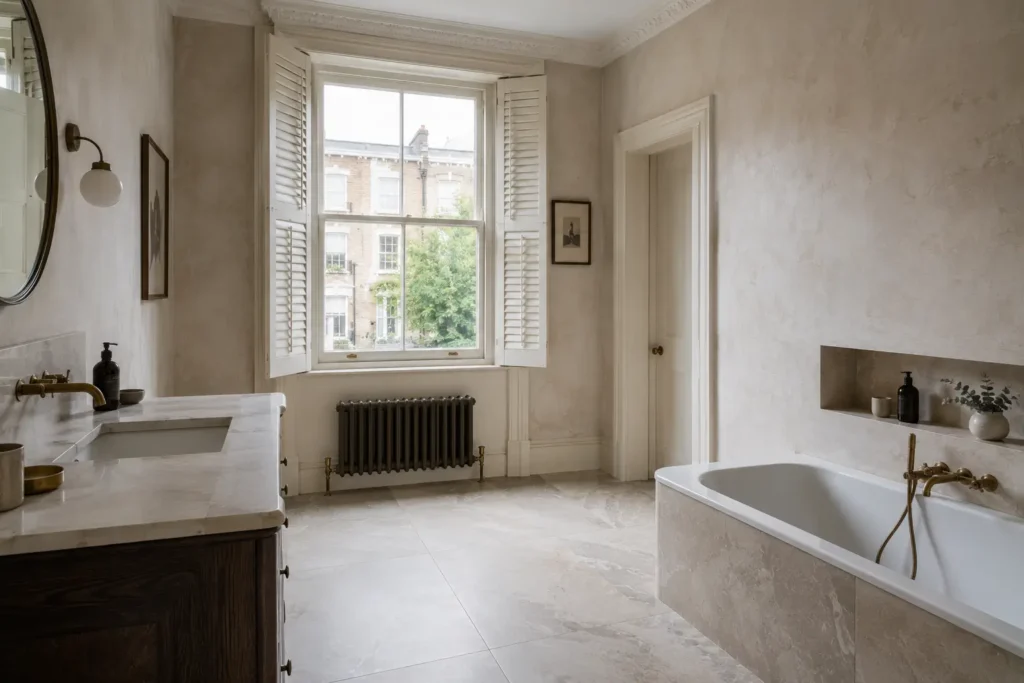
A freestanding bath is the one object in a bathroom chosen as much for its presence as its function — which makes it easy to choose on silhouette alone. The material deserves equal attention: it determines how the bath holds heat, how it feels against skin, how much your floor must carry, and how it looks in year ten.
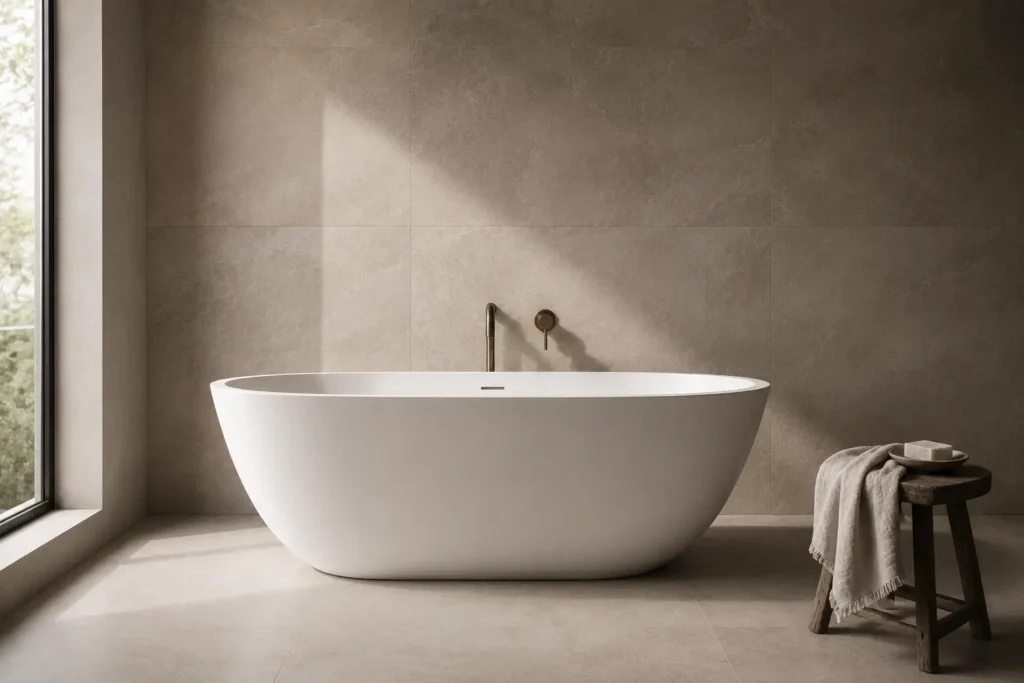
Solid Surface and Mineral Composite
Cast from mineral powder and resin, solid surface baths are the current benchmark. The material is warm to first touch, holds bath temperature well, and takes a matt, stone-like finish that suits contemporary rooms. Weight is substantial but manageable — typically 100 to 150kg empty — and minor marks can be polished out of the surface, which ages gracefully as a result.
Stone Composite and Natural Stone
Heavier composites and carved natural stone offer the deepest visual gravity and excellent heat retention, at real structural cost: several hundred kilograms before water. In a ground-floor room or over a strengthened joist zone they are magnificent; on the first floor of a listed Chelsea townhouse they are a conversation with a structural engineer first.
Acrylic and Steel
Quality acrylic is warm, light — often under 40kg — and easy to install, which keeps it relevant for upper floors and refits. Its limits are surface hardness and a hollower acoustic when filling. Enamelled steel is the opposite character: cool to first touch, extremely hard-wearing, precise in line, and at its best in double-walled versions that temper the initial chill and hold heat honestly.
Choosing in Practice
Decide the floor’s capacity first, the feel second, the silhouette last. Sit in the bath dry — literally — because lumbar angle and depth matter more to daily pleasure than any specification sheet. Our showroom baths are filled-height and sittable. Come and try them; it is the only test that counts.