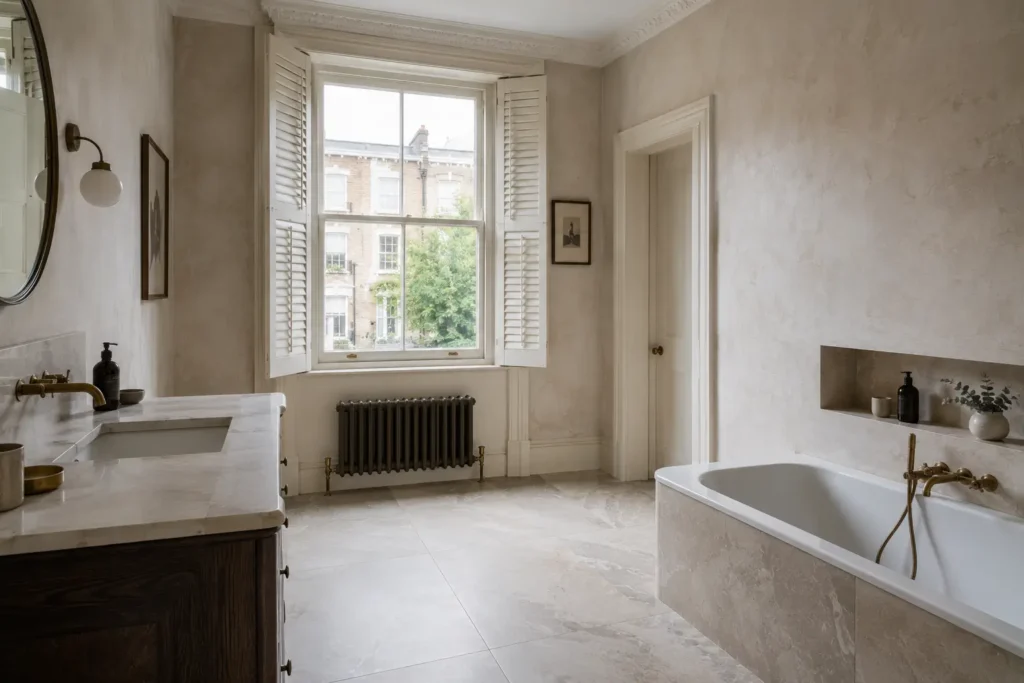
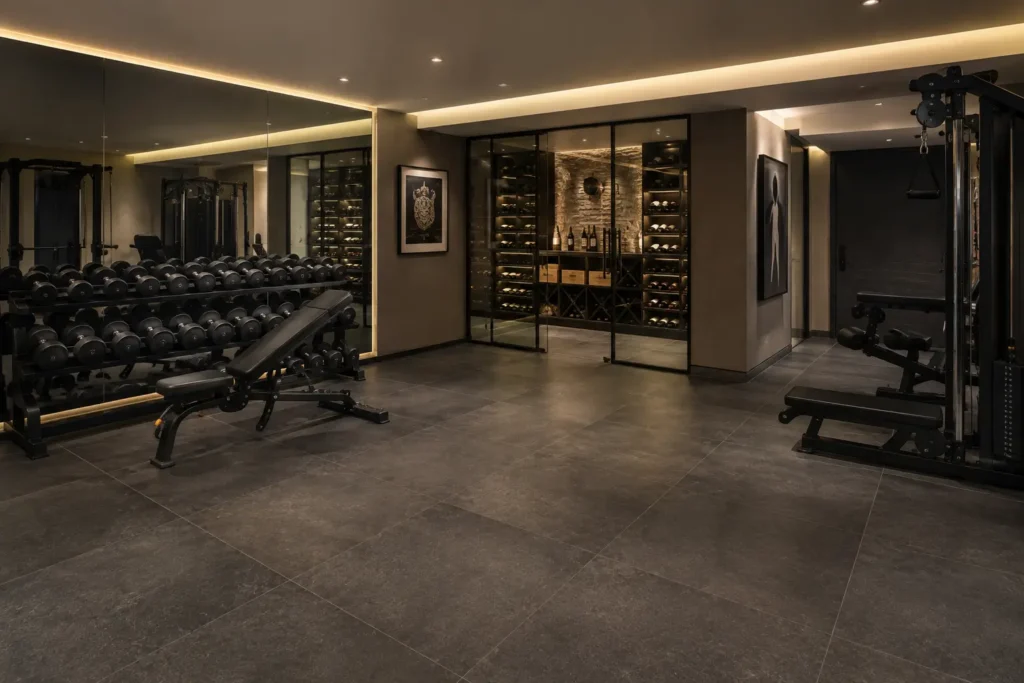
Two tiles from the same collection, in the same colour, can behave like different materials depending on the finish. Choosing between matt, polished, lappato and structured surfaces is less a question of taste than of light, use and room — and it is the decision people most often get wrong from a website photograph.
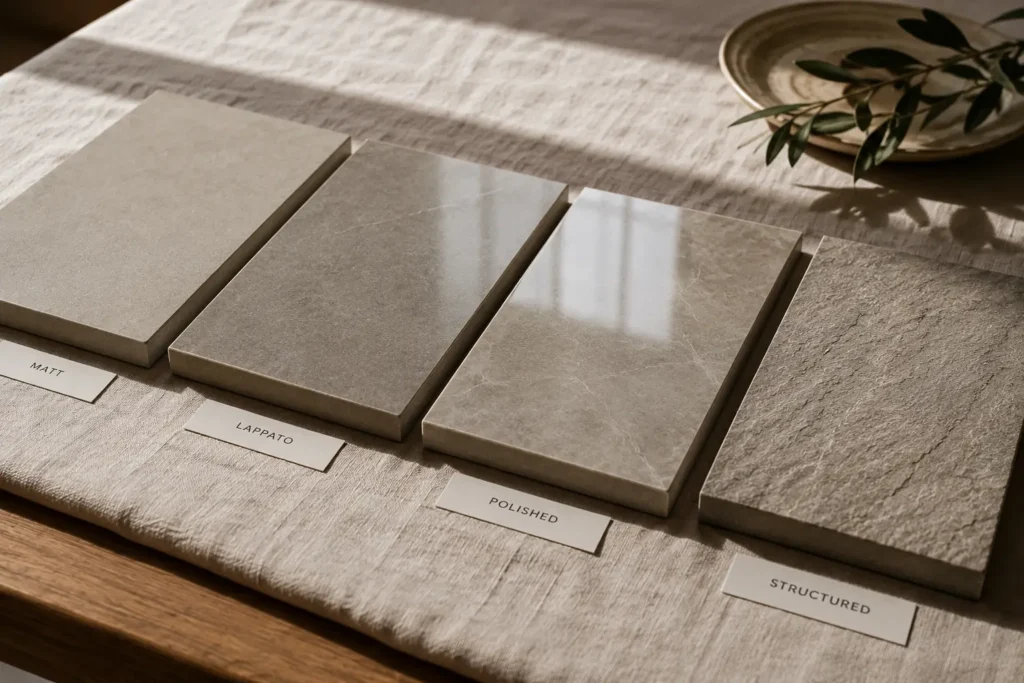
Matt: The Default for Good Reasons
A matt or natural finish diffuses light, hides water marks and fine dust, and offers dependable grip underfoot. It is the correct default for floors almost everywhere, and for bathroom floors nearly always. Its cost is that it absorbs light rather than returning it — in a dark room, an all-matt scheme can sit heavier than intended.
Polished: Light, With Conditions
Polished porcelain returns light and depth, which is why marble-effect collections look most convincing in it — polish is how we expect stone to behave. The conditions: it shows every water spot and footprint, and it is not a floor finish for wet areas. On walls, bookmatched features and dry-area floors with good natural light, it earns its keep.
Lappato: The Working Compromise
Lappato — a semi-polished, honed surface — sits between the two: more light than matt, more forgiveness than polish, and in many collections better slip performance than full gloss. For open-plan living floors where marble-effect is wanted but practicality rules, lappato is often the answer.
Structured: For Outside and Wet Zones
Structured finishes carry physical texture for grip — the specification for garden terraces from Hampstead to Richmond, pool surrounds and level-access showers. Many collections offer the same face in indoor and structured outdoor versions, letting one material run from kitchen to garden with the finish changing at the threshold.
Finishes cannot be judged on screen. In the showroom you can angle each surface against the light — and against a wet hand — before deciding.